avia.wikisort.org - Aeroplane
The Keystone B-3A was a bomber aircraft developed for the United States Army Air Corps by Keystone Aircraft in the late 1920s.
| B-3A | |
|---|---|
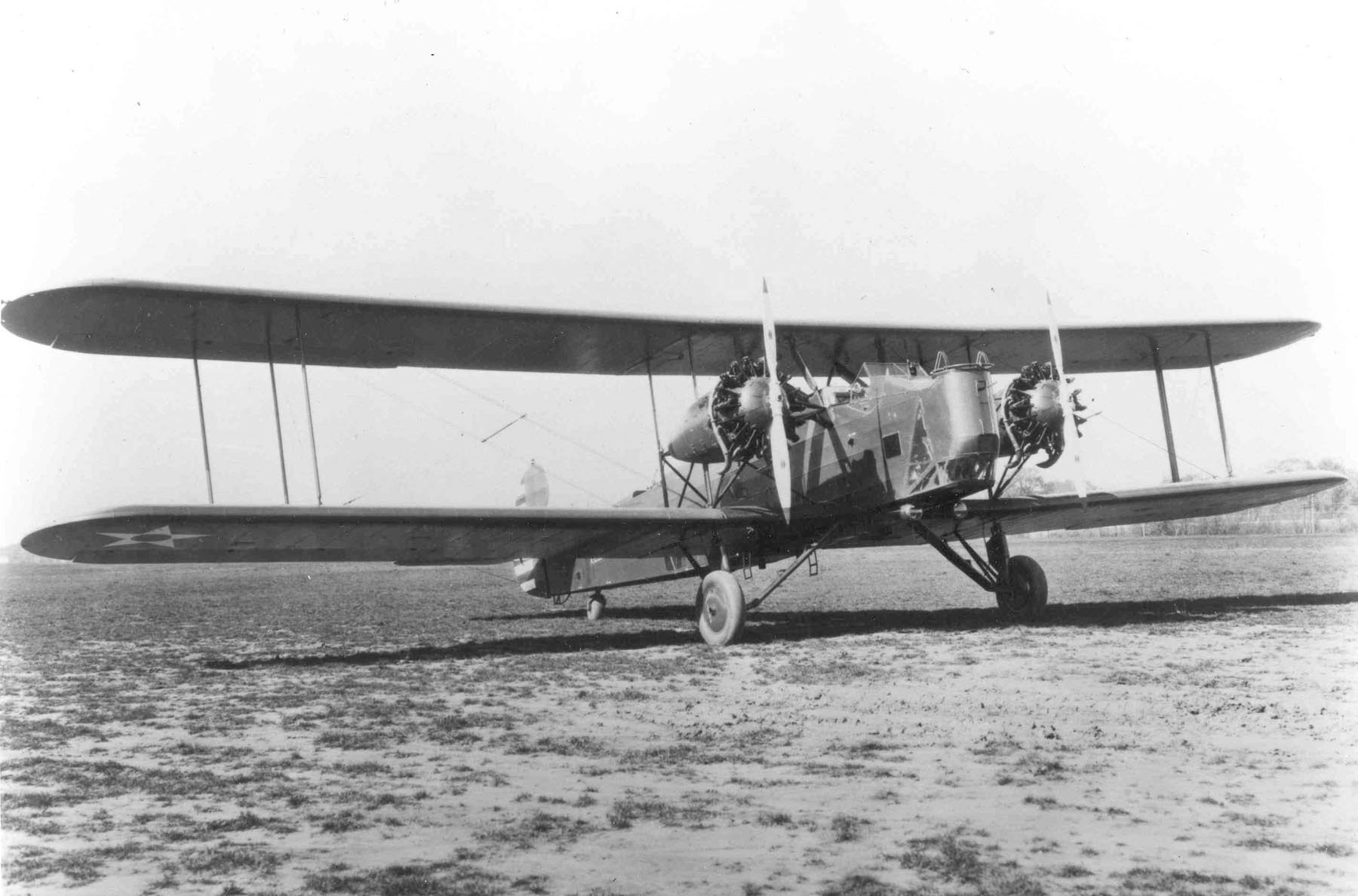 | |
| Keystone B-3A (S/N 30-281), the first B-3A built. | |
| Role | Light bomber |
| Manufacturer | Keystone Aircraft |
| Primary user | United States Army Air Corps |
| Number built | 63 B-3A/B-5 |
| Variants | Keystone B-4 Keystone B-5 Keystone B-6 |
Design and development
The B-3 was originally ordered as the LB-10A (a single-tail modification of the Keystone LB-6), but the Army dropped the LB- 'light bomber' designation in 1930.
Although the performance of the B-3A was hardly better than that of the bombers flown at the end of World War I, it had come a long way. In terms of its safety, it was far superior to its oldest predecessors.
Operational history
The B-3A was a member of the last family of biplanes operated by the US Army; it remained in service until 1940. A few years after it was first produced, the introduction of all-metal monoplanes rendered it almost completely obsolete.
Variants
- LB-10
- The last of the 17 LB-6s ordered (S/N 29-27) was converted with a re-designed single fin and rudder and two 525 hp Wright R-1750E engines. Delivered to Wright Field on 7 July 1929, it was wrecked on 12 November 1929.
- LB-10A
- This version used Pratt and Whitney R-1690-3 Hornet engines and was slightly smaller, in both wingspan and fuselage. A total of 63 were ordered (S/N 30-281/343). All were re-designated as the B-3A before any deliveries were made, with the final 27 built as B-5A with Wright engines.
- B-3A
- Ordered as LB-10A, 36 delivered as B-3A (S/N 30-281/316). The first aircraft was delivered in October 1930.
- B-5A
- Ordered as B-3A, re-engined with Wright R-1750-3 Cyclone engines, 27 built (S/N 30-317/343).
Operators
 United States

- United States Army Air Corps
- 2d Bombardment Group, Langley Field, Virginia
- 20th Bomb Squadron – operated B-3A and B-5A 1931–1932
- 49th Bomb Squadron – operated B-3A and B-5A 1931–1932
- 96th Bomb Squadron – operated B-3A and B-5A 1931–1932
- 4th Composite Group, Nichols Field, Luzon, Philippines
- 28th Bomb Squadron – operated B-3A 1932–1937
- 2nd Observation Squadron- operated B-3A 1938–1940[1]
- 5th Composite Group, Luke Field, Territory of Hawaii
- 23d Bomb Squadron – operated B-5A 1932–1937
- 72d Bomb Squadron – operated B-5A 1932–1936
- 6th Composite Group, France Field, Panama Canal Zone
- 25th Bomb Squadron – operated B-3A 1932–1936
- 7th Bombardment Group, March Field, California
- 9th Bomb Squadron – operated B-3A 1931–1934
- 11th Bomb Squadron – operated B-3A 1931–1934
- 31st Bomb Squadron – operated B-3A 1931–1934
- 19th Bombardment Group, Rockwell Field, California
- 30th Bomb Squadron – operated B-3A 1932–1936
- 32d Bomb Squadron – operated B-3A 1932–1935
- Air Corps Advanced Flying School, Kelly Field, Texas
- 42d Bomb Squadron – operated B-3A and B-5A 1935–1936
- 2d Bombardment Group, Langley Field, Virginia
 Philippines

- Philippine Army Air Corps
- 10th Bombardment Squadron
Specifications (B-3A)
General characteristics
- Crew: 5
- Length: 48 ft 10 in (14.9 m)
- Wingspan: 74 ft 8 in (22.8 m)
- Height: 15 ft 9 in (4.8 m)
- Wing area: 1,145 sq ft (106.4 m2)
- Empty weight: 7,705 lb (3,495 kg)
- Gross weight: 12,952 lb (5,875 kg)
- Powerplant: 2 × Pratt & Whitney R-1690-3 radial engines, 525 hp (392 kW) each
Performance
- Maximum speed: 114 mph (183 km/h, 98 kn)
- Cruise speed: 98 mph (158 km/h, 85 kn)
- Range: 860 mi (1,400 km, 760 nmi)
- Service ceiling: 12,700 ft (3,870 m)
- Rate of climb: 530 ft/min (2.7 m/s)
- Wing loading: 11.31 lb/sq ft (55.42 kg/m2)
- Power/mass: 0.0811 hp/lb (133 W/kg)
Armament
- Guns: 3 × .30 in (7.62 mm) machine guns
- Bombs: 2,500 lb (1,100 kg); 4,000 lb (1,800 kg) on short runs
See also
Related development
Related lists
- List of bomber aircraft
- List of military aircraft of the United States
References
- Notes
- "Fact Sheet – Keystone B-3A." National Museum of the United States Air Force. Retrieved: 14 July 2017.
- Bibliography
- Andrade, John. U.S. Military Aircraft Designations and Serials since 1909. Leicester, UK: Midland Counties Publications, 1979, pp. 43, 135. ISBN 0-904597-22-9.
- The Illustrated Encyclopedia of Aircraft (Part Work 1982–1985). London: Orbis Publishing, 1985, p. 2255.
- Maurer, Maurer. Combat Squadrons of the Air Force, World War II. Maxwell AFB, Alabama: Air Force Historical Studies Office, 1982. ISBN 0-89201-097-5.
External links

- Encyclopedia of American Aircraft
- Photograph of B-3 on the ground
- Photograph of B-3 landing
- USAF Museum article on LB-10
- USAF Museum article on B-3
| Authority control |
|---|

На других языках
- [en] Keystone B-3
[fr] Keystone B-3
Le Keystone B-3 est un bombardier développé aux États-Unis à la fin des années 1920. Il est utilisé par l'USAAC entre 1931 et 1937.[it] Keystone B-3
Il Keystone B-3 fu un bombardiere leggero bimotore e biplano sviluppato dall'azienda aeronautica statunitense Keystone Aircraft nei tardi anni venti del XX secolo e destinato a equipaggiare i reparti della United States Army Air Corps (USAAC), l'allora componente aerea del US Army, l'esercito degli Stati Uniti d'America.Другой контент может иметь иную лицензию. Перед использованием материалов сайта WikiSort.org внимательно изучите правила лицензирования конкретных элементов наполнения сайта.
WikiSort.org - проект по пересортировке и дополнению контента Википедии