avia.wikisort.org - Aeroplane
The Aichi E16A Zuiun (瑞雲 "Auspicious Cloud", Allied reporting name "Paul") was a two-seat reconnaissance seaplane operated by the Imperial Japanese Navy during World War II.
| E16A Zuiun | |
|---|---|
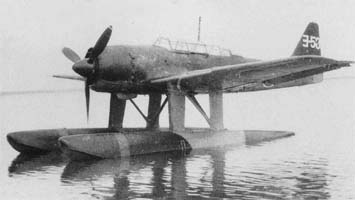 | |
| A E16A1 Yo-53 of the Yokosuka Kōkutai (Naval Air Group), as can be seen by its tail markings. | |
| Role | Reconnaissance Floatplane |
| Manufacturer | Aichi Kokuki |
| First flight | 22 May 1942 |
| Introduction | February 1944 |
| Primary user | IJN Air Service |
| Produced | 1944–1945 |
| Number built | 256[1] |
Design and development
The Aichi E16A originated from a 1939 specification for a replacement for the Aichi E13A, which at that time had yet to be accepted by the Imperial Japanese Navy Air Service (IJNAS).[2] Disagreements about the requirements in the 14-Shi specification prevented most manufacturers from submitting designs, but in 1941 a new 16-Shi specification was drafted by the IJNAS around the Aichi AM-22 design which had already been made by Aichi engineers Kishiro Matsuo and Yasuhiro Ozawa.[2] The first AM-22, which first got the experimental designation Navy Experimental 16-Shi Reconnaissance Seaplane and later the short designation E16A1, was completed by May 1942 and was a conventional, low-wing monoplane equipped with two floats and had the unusual (for a seaplane) feature of being equipped with dive brakes, located in the front legs of the float struts, to allow it to operate in a secondary role as a dive bomber.
Variants
- E16A1 Experimental Type 16 reconnaissance seaplane (16試水上偵察機, 16-Shi Suijō Teisatsuki)
- Initial named Experimental Type 14 two-seat reconnaissance seaplane (14試2座水上偵察機, 14-Shi 2-Za Suijō Teisatsuki). 3 prototypes produced. Mounted 1,300 hp (970 kW) Mitsubishi MK8A Kinsei 51 engine, 2 × forward-firing 7.7 mm (.303in) Type 97 machine guns, 1 × rearward-firing 7.7 mm Type 92 machine gun.
- E16A1 Zuiun Model 11 (瑞雲11型, Zuiun 11-gata)
- General production model. Mounted 1,300 hp (970 kW) Mitsubishi MK8N Kinsei 54 engine, 2 × forward-firing 20 mm Type 99-2 cannons, 1 × rearward-firing 13 mm Type 2 machine gun.
- E16A2 Provisional name Zuiun Model 12 (仮称瑞雲12型, Kashō Zuiun 12-gata)
- Initial named Zuiun Model 22. Single prototype with a 1,560 hp (1,160 kW) Mitsubishi MK8P Kinsei 62 radial engine. One plane converted from E16A1, incomplete.
Operators

- Imperial Japanese Navy Air Service
- Naval vessel
- Battleship Ise, supplied from 634th Kōkūtai.
- Battleship Hyūga, supplied from 634th Kōkūtai.
- Air unit
- Kitaura Kōkutai
- Yokosuka Kōkutai
- 634th Kōkutai
- 801st Kōkutai
- 301st Reconnaissance Hikōtai
- 302nd Reconnaissance Hikōtai
Specifications (E16A1 Zuiun Model 11)
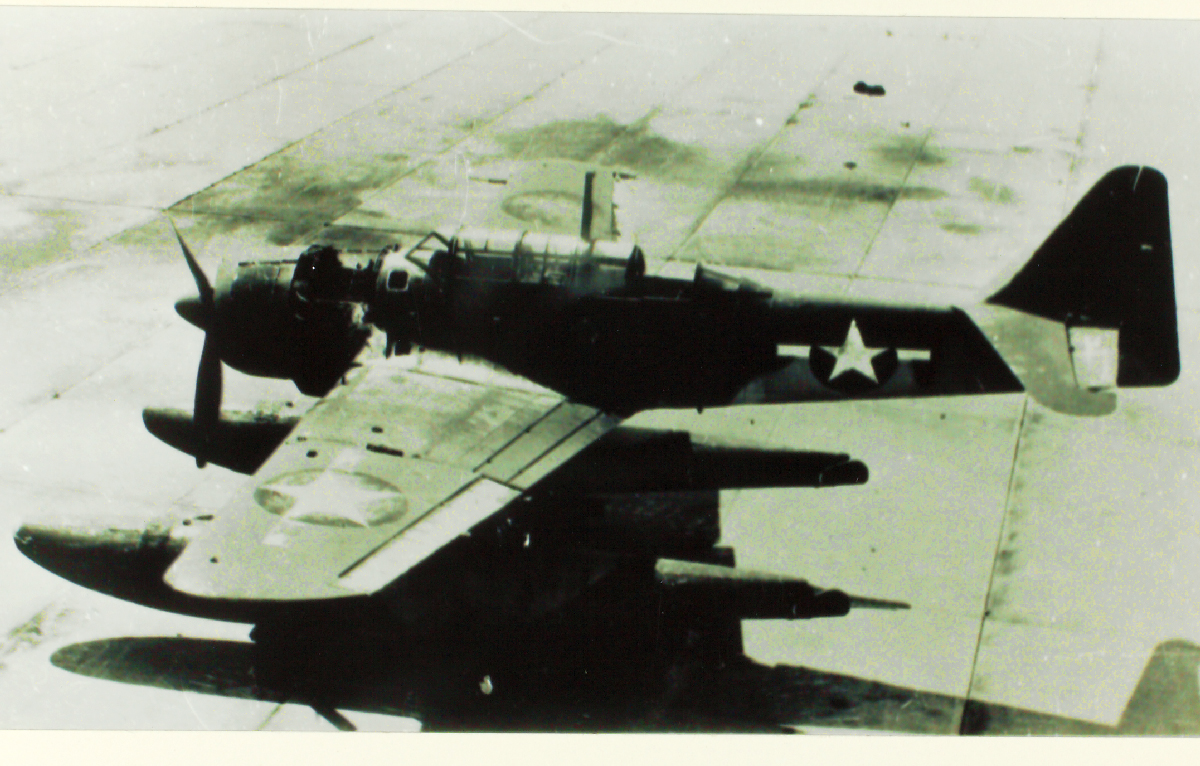
Data from Japanese Aircraft of the Pacific War[1]
General characteristics
- Crew: 2
- Length: 10.833 m (35 ft 6 in)
- Wingspan: 12.81 m (42 ft 0 in)
- Height: 4.791 m (15 ft 9 in)
- Wing area: 28 m2 (300 sq ft)
- Empty weight: 2,945 kg (6,493 lb)
- Gross weight: 3,900 kg (8,598 lb)
- Max takeoff weight: 4,553 kg (10,038 lb)
- Powerplant: 1 × Mitsubishi MK8D Kinsei 54 14-cylinder air-cooled radial piston engine, 970 kW (1,300 hp) for take-off
- 895 kW (1,200 hp) at 3,000 m (9,843 ft)
- 820 kW (1,100 hp) at 6,200 m (20,341 ft)
- Propellers: 3-bladed constant-speed propeller
Performance
- Maximum speed: 439 km/h (273 mph, 237 kn) at 5,500 m (18,045 ft)
- Cruise speed: 333 km/h (207 mph, 180 kn) at 5,000 m (16,404 ft)
- Range: 1,176 km (731 mi, 635 nmi)
- Ferry range: 2,420 km (1,500 mi, 1,310 nmi)
- Service ceiling: 10,000 m (33,000 ft)
- Rate of climb: 10 m/s (2,000 ft/min)
- Time to altitude: 3,000 m (9,843 ft) in 4 minutes 40 seconds
- Wing loading: 139.3 kg/m2 (28.5 lb/sq ft)
- Power/mass: 0.2491 kW/kg (0.1515 hp/lb)
Armament
- Guns:
- 2 fixed forward-firing 20 mm (0.787 in) Type 99 Mark 2 machine guns in the wings
- 1 flexible rearward-firing 13 mm (0.512 in) Type 2 machine gun for the observer
- Bombs:
- 250 kg (551 lb) of bombs
See also
Aircraft of comparable role, configuration, and era
Related lists
- List of aircraft of Japan during World War II
- List of aircraft of the Japanese Navy
- List of aircraft of World War II
- List of military aircraft of Japan
- List of flying boats and floatplanes
References
- Notes
- Francillon 1979, p. 287.
- Francillon 1979, p. 284.
- Bunrindō (1983), p. 110–111, p. 159–163
- Bunrindō (1994), p. 8, p. 25, p. 71–77
- Bibliography
- Francillon, Ph.D., René J. Japanese Aircraft of the Pacific War. London: Putnam & Company Ltd., 1979. ISBN 0-370-30251-6.
- Green, William. "Aichi E16A1 Zui-un (Paul)" War Planes of the Second World War, Volume Six: Floatplanes. London: Macdonald & Co.(Publishers) Ltd., 1962, pp. 116–118.
- Taylor, Michael J.H. Jane's Encyclopedia of Aviation. London: Studio Editions, 1989, p. 43.
- Bunrindō (Japan)
- Kōku-Fan Illustrated Special, Japanese Military Aircraft Illustrated Vol. 3 "Recinnaissance/Flying-boat/Trainer/Transport", January 1983
- Famous Airplanes of the World No. 47 "Imperial Japanese Navy Reconnaissance Seaplane", July 1994
External links

На других языках
[de] Aichi E16A
Die Aichi E16A Zuiun (jap. 瑞雲, dt. „günstige Wolke“; alliierter Codename Paul) war ein Aufklärer und Sturzkampfflugzeug der japanischen Marineluftwaffe im Zweiten Weltkrieg. Ungewöhnlich für ein Wasserflugzeug war die Rolle als Sturzkampfflugzeug und die in diesem Zusammenhang in den vorderen Schwimmerstreben eingebauten Sturzflugbremsen, die sich seitlich öffnen ließen. Sie löste die Aichi E13A ab.- [en] Aichi E16A
[fr] Aichi E16A Zuiun
L'Aichi E16A Zuiun est un hydravion à flotteurs biplace de reconnaissance lointaine japonais de la Seconde Guerre mondiale, baptisé Paul par les Alliés.[it] Aichi E16A
Lo Aichi E16A Zuiun (瑞雲 (?), "Nuvola d'auspicio", nome in codice alleato Paul)[3] era un idroricognitore monomotore biposto prodotto dall'azienda giapponese Aichi Tokei Denki e utilizzato dalla Dai-Nippon Teikoku Kaigun Kōkū Hombu, il Servizio aeronautico della Marina imperiale giapponese durante la seconda guerra mondiale.[ru] Aichi E16A Zuiun
Гидроразведчик Облако[1] ВМС Императорской Японии (яп. 海軍水上偵察機「瑞雲」/愛知E16A Кайгун суйдзё тэйсацуки «Дзуйун»/Аити и-дзю-року-эй)[2] — цельнометаллический одномоторный гидросамолет ВМС Императорской Японии.Другой контент может иметь иную лицензию. Перед использованием материалов сайта WikiSort.org внимательно изучите правила лицензирования конкретных элементов наполнения сайта.
WikiSort.org - проект по пересортировке и дополнению контента Википедии